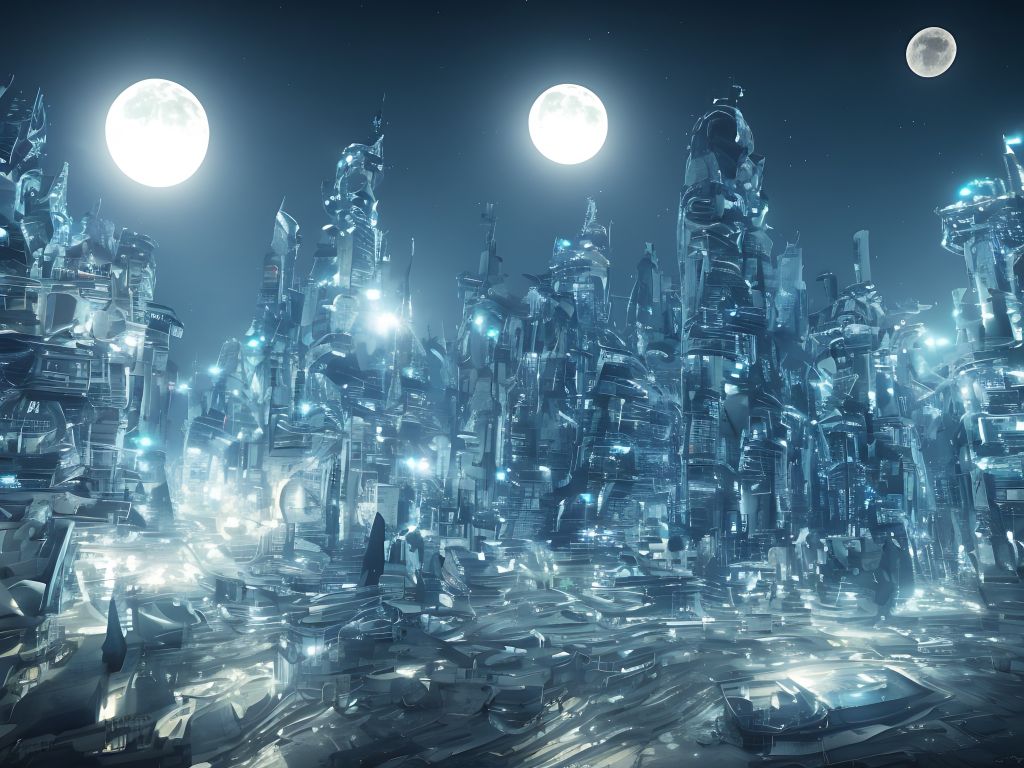
I used no AI to draft this article – the thought makes me feel icky. But I did use AI to create some of the images below. More importantly, this post tells the story of my journey using AI to create a worship song.
I tried to approach this experiment with an open mind – not to prove a point, but to explore if there can be any legitimacy to wholly AI-generated worship music. How does this affect our church culture?
Here’s the song:
Modern worship music
I have been discussing the “state” of worship music with a close friend. We would both welcome reformation. Within the free church (of which I am part), the canon of worship songs is dominated by the output of four or five main churches/streams. I am not the first to make this observation. Is such a narrow “gene pool” healthy?
At the same time, worship has become increasingly performative. Heavily amplified music, in-ear monitors, drum screens, and carefully orchestrated “spontaneity” are common and sought after. I wonder how first century Christians would view this. But perhaps this belongs in a separate blog post.
I am not here to rant. I am here to tell you about my experiment.
My professional interests see me heavily involved in the use and exploration of generative AI. “What,” I wondered, “if someone were to use this to create worship songs?”
No doubt many people already have. I am rarely the first to try things.
Would it be a good thing? A bad thing? Entirely neutral? That’s what I set about finding out.
AI-generated music?
I did not know how to generate a song using AI. A guest on a podcast mentioned Google Labs projects, particularly Google Flow Music. This is an experimental AI tool designed to create audio from written prompts.
To learn the basics, I turned to this excellent thirteen-minute beginners’ tutorial from Kevin Stratvert. His tagline is “tech made simple”, a mission I can endorse!
Armed with this knowledge, I drafted the following prompt for Flow, to guide it towards creating a certain type of song. This prompt reflects my theological and musical preferences.
A modern Christian hymn that focuses on the holiness of God (as seen in Isaiah 6 and Revelation 4) and the comfort this brings (Isaiah 41, Psalm 23)

Lyrics that align doctrinally with Reformed and Charismatic theology

Suitable for playing with a single rhythm guitar or keyboard (though it could also feature drums/percussion and other instruments)

Structure consists of four or five verses with a chorus

Melodically simple enough (melody and timing) for congregational use

The use of jazz chords and progressions (similar to Graham Kendrick)

Chord notation should be provided if possible
Possibly it was naïve, asking for chords. I thought it was worth a shot.
I did not send this prompt straight to Flow. Instead I turned to Microsoft Copilot (I have a subscription), and asked it this:
I'm trying to write a prompt for Google Flow Music, to assist direct it to generate a worship song along the lines we've discussed. Here's what I've drafted so far. Please help me improve on this prompt:…
Copilot then enhanced my prompt substantially:
Title: Holy God, Our Comfort and Strength (optional — helps guide thematic cohesion)
Prompt:Create a modern Christian worship hymn centred on the holiness of God as revealed in Isaiah 6 and Revelation 4, and the comfort God gives His people as expressed in Isaiah 41 and Psalm 23.
The lyrics should:
- express awe at God’s holiness (“holy, holy, holy”),
- reflect themes of divine comfort, presence, and shepherding,
- align doctrinally with Reformed and Charismatic theology (emphasise God’s sovereignty, human dependence, the Spirit’s presence, and Christ-centred worship),
- avoid vague or overly sentimental language,
- be suitable for congregational singing.
Musical requirements:
- Structure: 4–5 verses plus a recurring chorus.
- Melody: simple, singable, with clear timing suitable for congregational worship.
- Harmony: incorporate gentle jazz-influenced chords and progressions (similar to Graham Kendrick’s harmonic style).
- Arrangement: playable on solo rhythm guitar or keyboard, with optional light percussion or additional instruments.
- Provide chord notation if possible (e.g., Cmaj7, Dsus4, G/B).
Tone and style:
- Reverent, warm, and hopeful.
- A blend of traditional hymn-like theological depth with modern worship accessibility.
- Avoid overly complex musical phrasing or melismatic vocal lines.
Output:
- Full lyrics (verses + chorus).
- Suggested chords.
- Optional notes on tempo, key, and style.
Optional: Musical style inspired by Graham Kendrick, Keith & Kristyn Getty, and modern acoustic worship.
I preferred Copilot’s version, so I sent that to Google Flow.
Refining the output
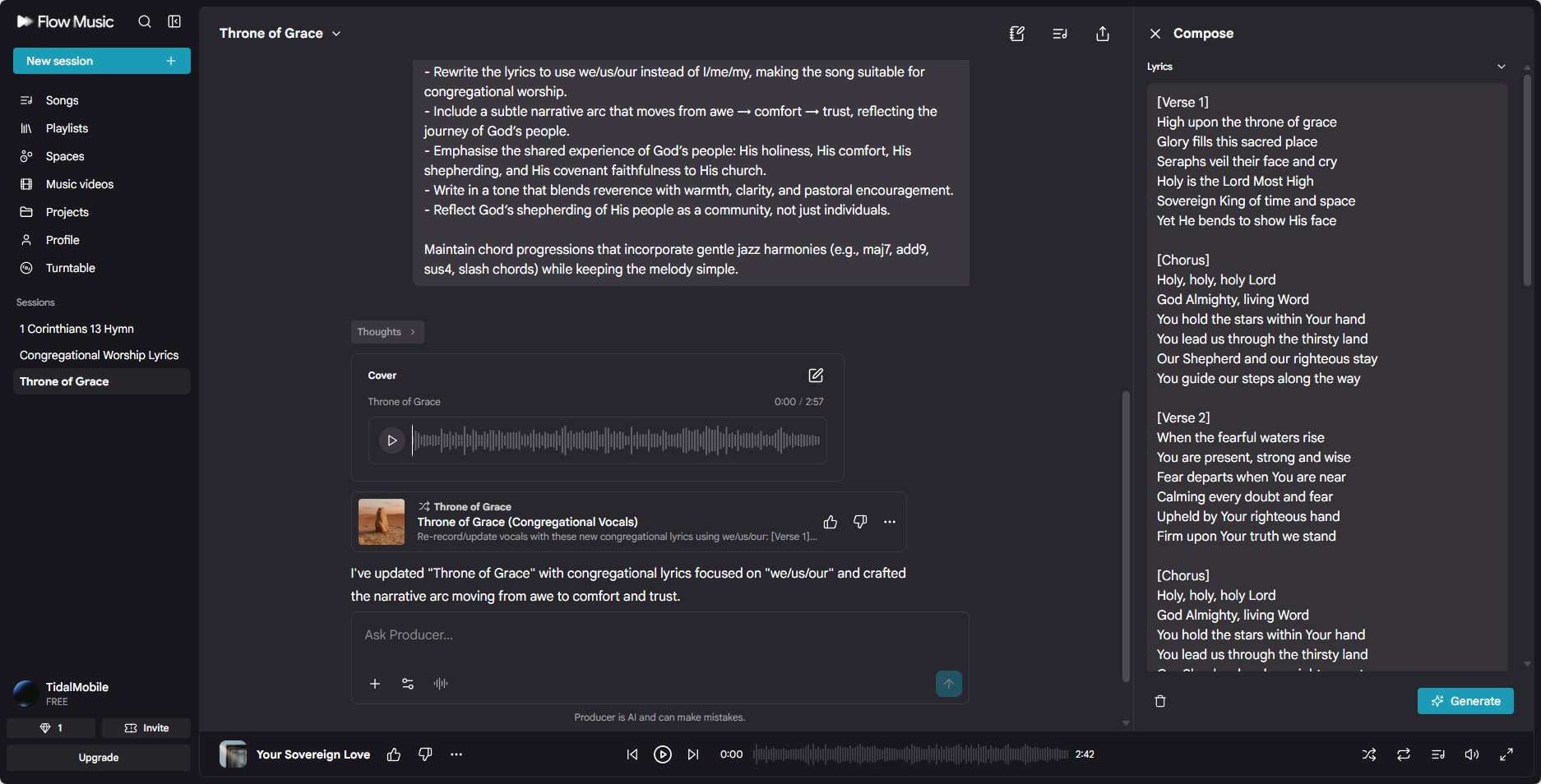
As a newcomer to this process, the initial output astonished me. Flow produced a full arrangement: a male vocalist with backing singers and instrumentals. It produced lyrics which were for the most part doctrinally sound.
There was room for improvement, notably shifting from “I” to “we” language. With Copilot’s assistance, I drafted this refinement prompt for Flow:
Rewrite the lyrics to use we/us/our instead of I/me/my, making the song suitable for congregational worship.

Include a subtle narrative arc that moves from awe → comfort → trust, reflecting the journey of God’s people.

Emphasise the shared experience of God’s people: His holiness, His comfort, His shepherding, and His covenant faithfulness to His church.

Write in a tone that blends reverence with warmth, clarity, and pastoral encouragement.

Reflect God’s shepherding of His people as a community, not just individuals.
Flow largely ignored me. It did change “I/my” to “we/our”, but there was no introduction of a narrative arc. The lines in verse 3:
Table spread before my foes Oil upon my head overflows Mercy follows all my days
became:
Table spread before Your flock, Mercy anchored on the Rock. Goodness follows all our days,
and there were some slight changes to the composition. But it was essentially as first generated. Perhaps this says more about my inexperience with the tool than about the limitations of Google Flow Music.
Chord sheets
It has been my privilege to be able to lead worship (frequently alongside my wife) for over thirty years. I do not consider myself skilful – just willing. I use chord sheets when I lead, which many more talented leaders consider anathema. For me, it is far too likely that mid-song I would otherwise forget chords, lyrics or both. That would bless no one.
So the song needed a chord sheet, for me to attempt to play it. I also wanted a lead sheet. Although I do not read music fluently, I often rely on it when nailing down the melody, learning a new song. I know from personal experience that these are the kinds of resources that greatly assist with introducing new songs to our churches.
Is there any easy way, I mused, to produce chords from Flow’s output? I asked this question of Google Gemini (spreading the love around various AI chatbots). For detecting chords and key, it made a few suggestions. Several were not at all helpful.
I tried Moises.ai, which under the free tier only worked with the first minute of the song. It also missed chord variants like sus2, for example.
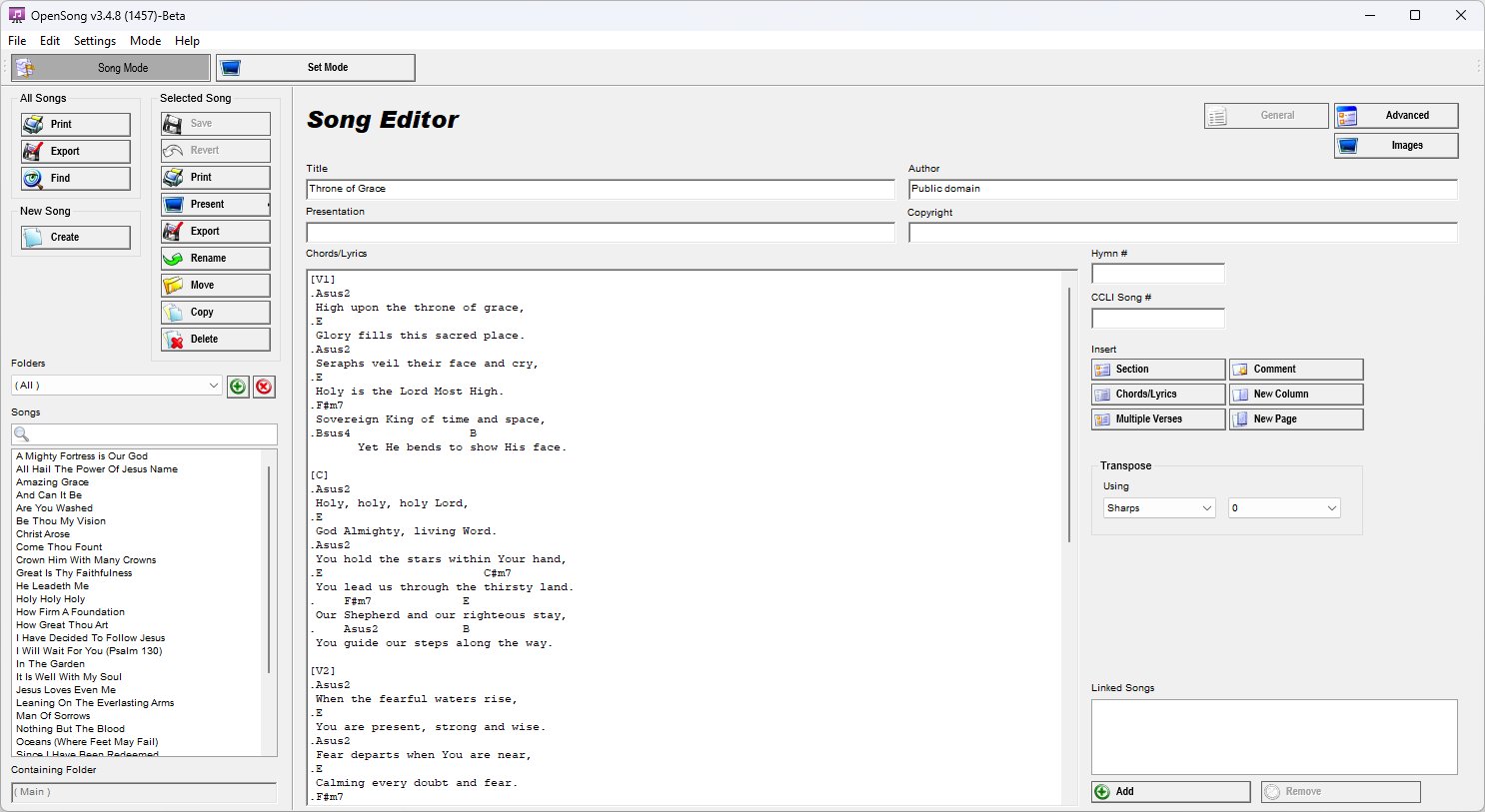
Next I tried the Android app Chord AI. This gave me all the chords, including variants, but in the free version would not output them. So I switched to the tried and tested open-source program OpenSong and transcribed the chords by hand from Chord AI. Not too tedious.
The song is thoroughly stuck in my head by this point.
Lead sheets
Though I do not read music particularly well, I prefer to learn melody lines from a static reference point, like the lead sheets you can download from SongSelect (if your church has a subscription). Musically, I am a self-taught paragon of impostor syndrome, so I am ably assisted in this by my wife, who is classically trained.
I asked ChatGPT for guidance on how to convert the song into score. For this I needed the vocal “stem” (a new term to me) – the vocals only, extracted from the audio file produced by Google Flow Music. Fortunately GFM allows you to download different stems – more AI wizardry – to generate vocals, drums and “other” stems from the original audio.
ChatGPT suggested feeding the vocal stem to the free Spotify Basic Pitch. This transcribed the vocal track stem to MIDI. I then imported the MIDI to MuseScore.
Not good.
The result was a vague approximation of the tune. All sorts of issues. Duplicated notes. Missing notes. Completely incorrect notes. Random notes in a different octave. Incorrect note durations. Unexpected triplets. You name it, it broke it.
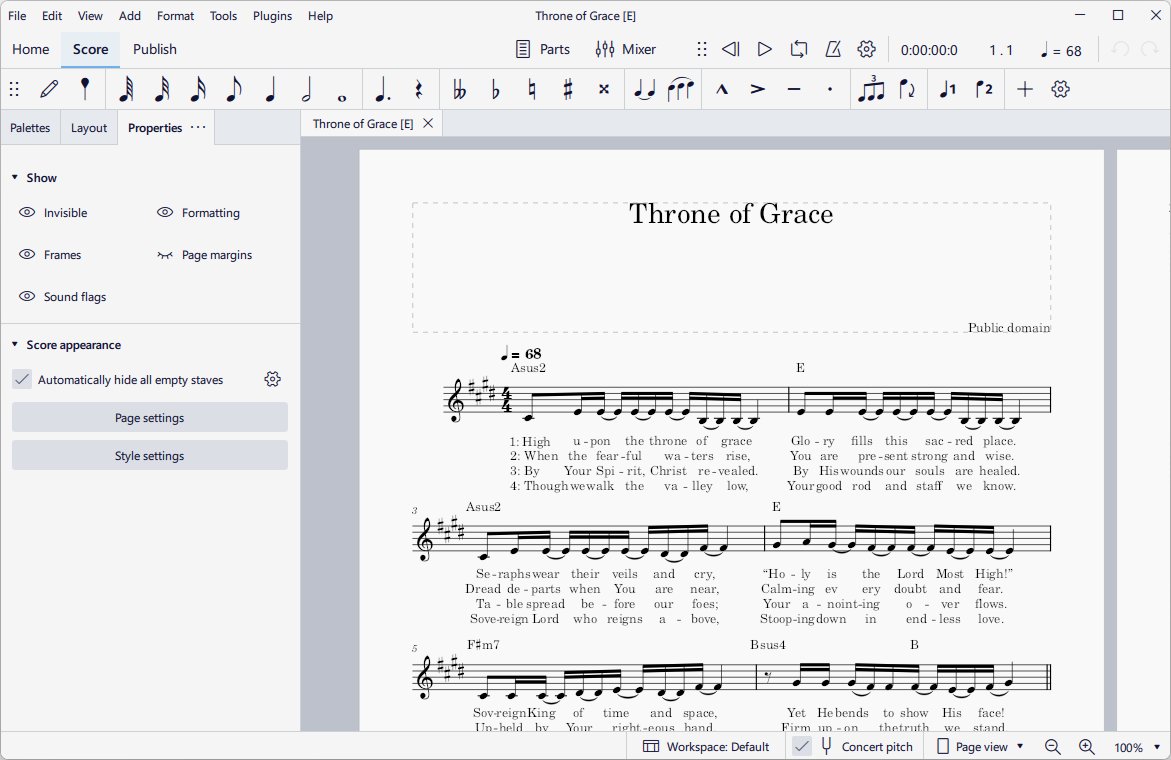
Ugh. So the only option I could then think of was to transcribe the tune manually into MuseScore.
Did I mention I do not read music all that well?
Being the human-only part of the process, this was more laborious and time-consuming than the rest of the project. Arguably it was not really necessary. My wife certainly questioned why I was doing it! But for some reason I could not let it go.
My rendering is not perfect, but it is much closer to GFM’s production than the output from Spotify Basic Pitch. You could review it in the resources below.
Interestingly it has been my professional experience that AI does not always offer the “speed up” we are promised. Human polishing can still take a lot of time!
An independent critique
Having arrived at this stage, near completion, I inflicted the song on my friend. Here are his thoughts:
My initial thoughts are that it is a very modern/contemporary and very good aggregation of modern worship songs; so far too many words and pretty devoid of poetry. It’s not far off being a satire.
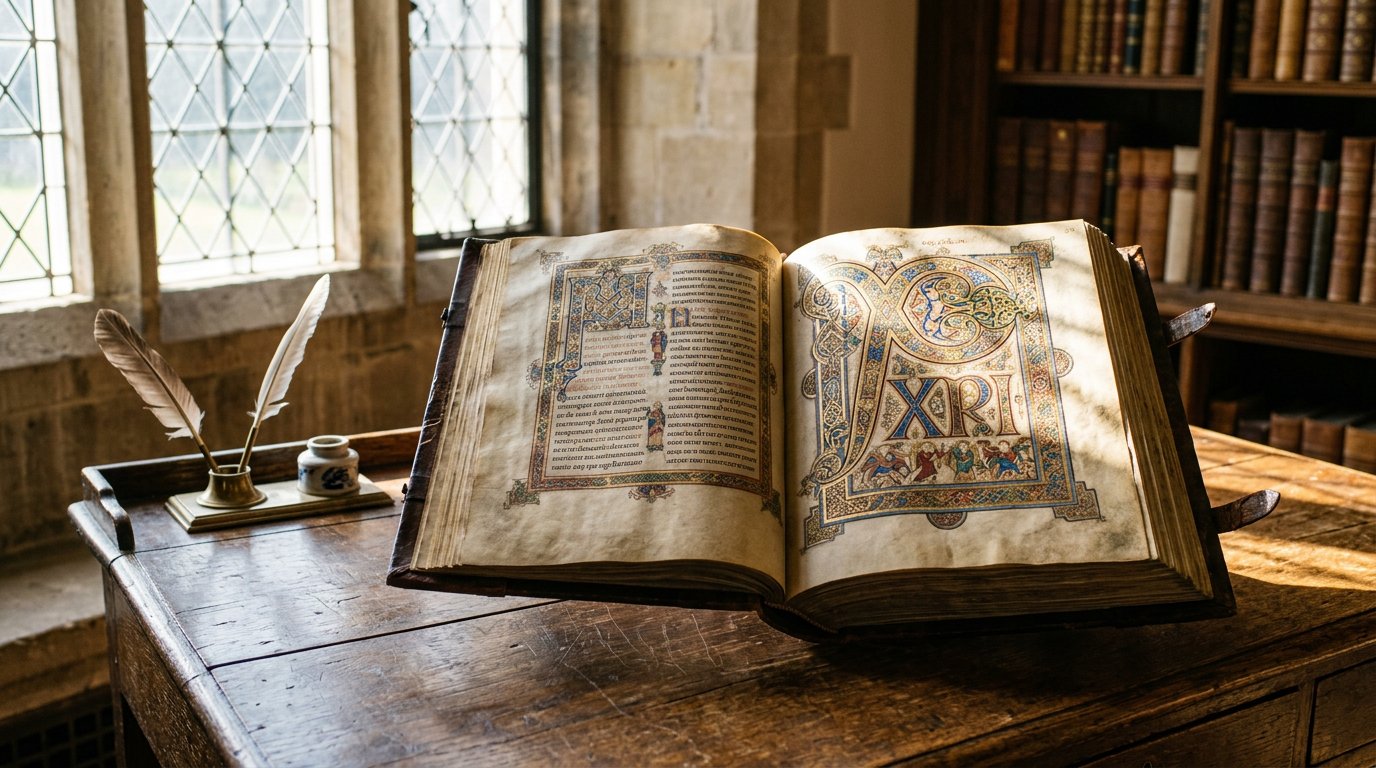
It’s definitely filled the congregational brief. I think it’s devoid of anything creative. I’m reading about The Book of Kells at present, 5th century illuminated manuscript, an illustrated gospel (remember the Iona album?). It was a life’s work of more than one monk. The artwork is so intricate it needs a magnifying glass to grasp the detail.
I know there is a fine line between art and idolatry but this is the right side of the line for me. It speaks of a creative, disciplined devotion, of hard work, good work, someone (or several people’s) best work. It’s an act of reverent worship.
I think this is what is missing from the AI song and from so much formulaic ‘human’ worship. It’s too easy; it doesn’t involve the acquisition of skill and knowledge of the subject and relationship with it; only (notable) knowledge of how to train the AI.
You will notice my friend also considers some modern worship music, created without the assistance of AI, to be similarly shallow. I have a lot of sympathy with that position. More on that below.
Analysing the result
So what do I make of the results? Considering just the song now (not the process):
The song was slightly too high for congregational use. I transposed it down one tone.
It lacked poetry.
There was no sense of a journey, in the lyrics or the music. It feels flat, in both respects. The best hymns lead the worshipper on a journey: into reverence, from lamentation to hope or through a Bible story such as the Passion.
These are mechanical limitations, which perhaps can be improved. In an area of rapid development, it is easy to believe that the level of polish and accuracy will only increase and new capabilities will emerge.
The deeper question is: should we even do this? Should we use AI to produce worship songs from scratch?
I have the privilege of preaching from time to time, and I have preached more sermons than I have written songs. So perhaps that is why I have clarity on this point:
To use generative AI to create a sermon would be an abuse of the sacred calling of preaching.
Let me clarify: We can use AI to assist in researching a sermon, quickly finding relevant scriptures, commentaries, historical notes, etc. AI, with all its knowledge could present multiple explanations of a difficult passage, drawing on many traditions and writings. But I would not ask an AI tool to write a sermon for me.
Sermon-writing is at its heart an act of pastoral ministry. Every sermon I prepare, I must wrestle with the passages, the topic, as heaven’s searchlight shines on me and reveals my own inadequacies. This allows me to stand before a congregation with integrity, having been humbled by God.
An AI cannot wrangle with or be shaped by scripture. It lacks the ability to call on the Holy Spirit, no matter how convincingly it mimics human speech and song. The best sermons will always be crafted through human spiritual interaction with the text, commentaries, and with lived experience. Generative AI has no capacity for spiritual interaction and it has no lived experience.
What, then, of songwriting for corporate worship?
Our congregants are far more likely to remember the words of the songs they sing than the words of a sermon they heard. Sorry, preachers. For this reason above all others, it is vital songwriters ensure worship songs are well crafted, with faithful doctrine, singable tunes and God-honouring messages.
The best tool for creating such a song has always been and will always be a gifted, Spirit-filled believer.
AI is not the second-best tool. It is not even a contender.
Is it just AI music?
I am concerned too about the “fast food” nature of the Christian music industry. It is understandable for congregations to choose songs that appeal to their tastes. This risks a consumerist approach however, which feeds back into the creative process and thus we end up with output that has broad appeal, but not necessarily rich doctrinal content.
Surely that is not the way that Isaac Watts (When I Survey the Wondrous Cross), Charles Wesley (Christ the Lord Is Risen Today) or Fanny Crosby (To God Be the Glory) arrived at their creations, which have for so long stood the test of time. Through testing the market and selecting what most appeals to the common man?
I think not.
We do not always choose what’s best for us. We are sheep (John 10:14-16).
Valid uses?
If using AI to create an entire song is problematic, are there still legitimate uses for the budding or professional Christian songwriter? Here are ways I think AI can be an extremely helpful assistant:
Converting a written song into an orchestration – effectively bypassing the studio phase: A friend of mine has used this approach to bring several of his own songs to life.
Suggesting chord substitutions: I attempted this but wasn’t thrilled at the results. That’s likely because I was using the wrong tool. This approach could elevate the musicality of a song without changing its message or spirituality.
Offering alternative melodies/harmonies: AI contains “the whole of human knowledge”. This tends towards an averaging effect – where much that’s produced by AI looks or sounds similar. Still, in the whole of human knowledge, there are many different melodies. Perhaps AI can be used to swap out from that knowledge various melodic/harmonic sections, again without affecting lyrics or godliness.
Providing feedback: AI works well as an editor. Although I did not use AI to write this article, I used two different AI services to critique it. Many of the suggestions were helpful. (The words remain my own.) Certainly this seems a valid approach when writing music – provided the songwriter governs and enforces artistic integrity.
Closing thoughts
Time is our ally in any creative process. It allows us the opportunity to revisit a work with fresh eyes, a new perspective. Time allows us to bring new experiences to the process, to the creativity. God works in his people through time, disciplining us and transforming us into the likeness of Christ.
This turns the process of songwriting itself into an act of worship.
As I saw with my own experiment, AI allows less gifted creators to produce something with greater ease. But is a less gifted creator the best judge of the quality of the work? No, that requires training, experience and God-given talent.
If we open the floodgates of AI-driven worship music, will we end up with an abundance of candyfloss? Sweet, appealing, but lacking nourishment?
If worship music is drifting into a homogenised state, lacking diversity, depth and power, will AI accelerate and industrialise that decline?
No, perhaps it is best we leave songwriting to those gifted by God for the task. In honouring their calling, we honour their Creator.
Resources
The AI song created for this project is called “Throne of Grace”. Play it here:
Lyrics:
Verse 1 High upon the throne of grace, Glory fills this sacred place. Seraphs veil their face and cry, Holy is the Lord Most High. Sovereign King of time and space, Yet He bends to show His face.
Chorus Holy, holy, holy Lord, God Almighty, living Word. You hold the stars within Your hand, You lead us through the thirsty land. Our Shepherd and our righteous stay, You guide our steps along the way.
Verse 2 When the fearful waters rise, You are present, strong and wise. Fear departs when You are near, Calming every doubt and fear. Upheld by Your righteous hand, Firm upon Your truth we stand.
Verse 3 By Your Spirit, Christ revealed, By His wounds our souls are healed. Table spread before Your flock, Mercy anchored on the Rock. Goodness follows all our days, Taught by grace to sing Your praise.
Verse 4 Though we walk the valley low, Your good rod and staff we know. Sovereign Lord who reigns above, Stooping down in boundless love. Till we reach that heavenly shore, To exalt You evermore.
For saying that I work in technology, I feel embarrassingly late to this party. I was recently transfixed by posts on Mastodon that showed images generated by Midjourney. I’d never heard of Midjourney. This started me off down a rabbit hole.
A few metres down the rabbit hole, I read about InvokeAI, an open-source alternative to Midjourney. A few metres more and I discovered that I would be able to run InvokeAI on my PC, which is equipped with an NVIDIA GeForce RTX 3060 graphics card.
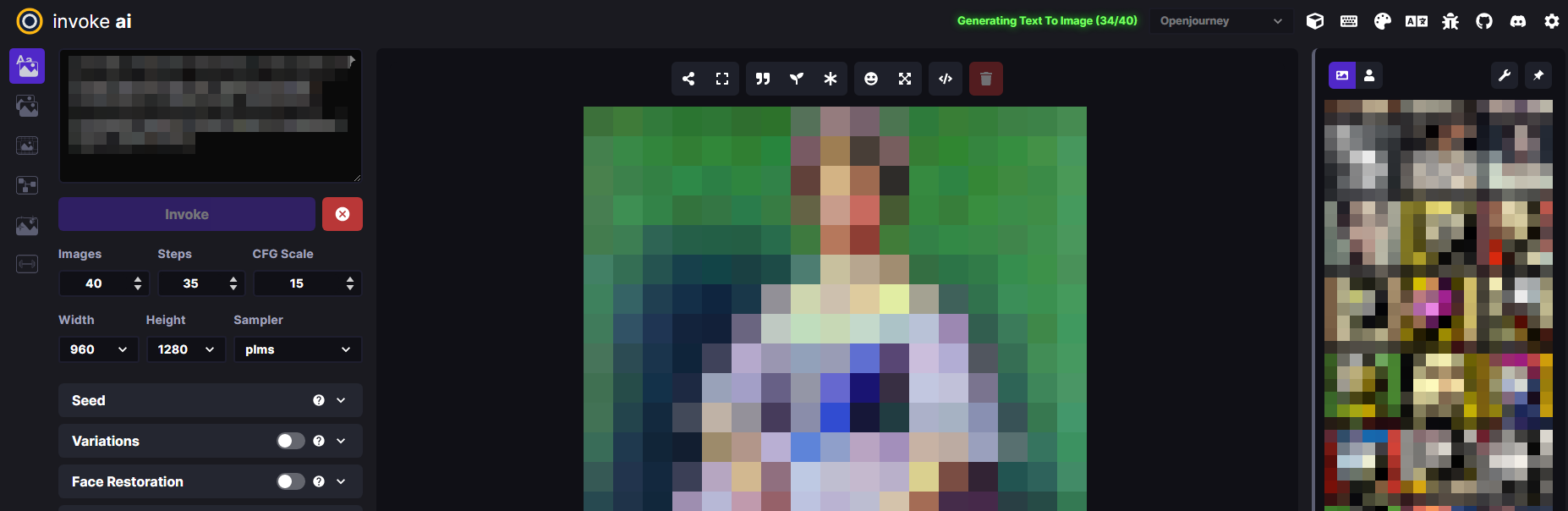
That’s how I found myself installing and running InvokeAI, despite still knowing virtually nothing about any facet of AI, let alone image generation. Faced with the InvokeAI web interface, the first question becomes “What do all these knobs and buttons do? What are “CFG Scale”, “Sampler” and “Steps”? What is the difference between the “Models”?
In case you find yourself in the same position, here’s a handy guide.
What is Midjourney?
Midjourney is an independent research lab that produces a proprietary artificial intelligence program under the same name that creates images from textual prompts. It is powered by AI and machine learning algorithms and uses text prompts and parameters to generate images. It can be used for both creative and practical applications, such as creating custom artwork and logos, or visualising data. Midjourney is constantly learning and improving, and can be accessed through the Discord chat app by messaging the Midjourney Bot.
What is Stable Diffusion?
Stable Diffusion is an image-generating model developed by Stability AI. It is powered by artificial intelligence and machine learning algorithms, and uses text prompts and parameters to generate images. It can be used for both creative and practical applications, such as creating custom artwork and logos, or visualising data. Stable Diffusion is open-source, meaning anyone can access and use the model without cost. The model has a relatively good understanding of contemporary artistic styles, making it a popular choice for creative applications.
Stable Diffusion is based on the concept of a CFG Scale (see below), which is a mathematical representation of the complexity of a system, which can be used to analyze the behavior of the system over time. The CFG Scale is used to measure the stability of a system, which is an important factor in understanding how the system evolves over time.
The Stable Diffusion algorithm uses a “sampler” (see below) to collect data from the system at different points in time. The algorithm then uses a model to analyse the data collected from the sampler.
What’s InvokeAI then?
InvokeAI is an implementation of Stable Diffusion. It is powered by artificial intelligence and machine learning algorithms, and uses text prompts and parameters to generate images. It is optimised for efficiency, and can generate images with relatively low VRAM requirements. It supports the use of custom models.
The InvokeAI web interface offers lots of parameters. The rest of this article is dedicated to explaining those parameters.
InvokeAI‘s web interface
CFG Scale
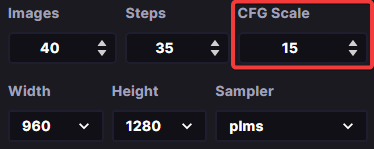
The CFG Scale, or Classifier-Free Guidance Scale, is a parameter in the Stable Diffusion image generation model. It controls how much the image generation process is guided by the initial input, and how much it is random. (It determines the amount of noise in the generated image.) A high CFG Scale value produces output more closely resembling the text prompt.
The CFG Scale in InvokeAI’s web interface
A low CFG Scale value in Stable Diffusion can result in the output image having a lower fidelity and quality. It can for example lead to the model generating extra arms and legs! But it also increases the diversity and creativity of the result.
Increasing the CFG Scale value can result in higher quality, as well as a more dynamic colour range. It can also lead to more detailed images with a higher resolution. That said, high CFG values can lead to unrealistic-looking images.
The best CFG Scale value range for Stable Diffusion is generally between 7 and 11. Higher values of 50 to 100 are recommended for good outpainting results.
The Steps parameter
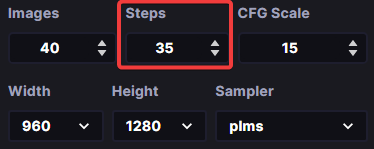
The Steps parameter of Stable Diffusion defines the number of inference steps used in the model. It dictates the amount of detail that is produced when generating images from text descriptions.
Steps parameter in InvokeAI’s web interface
Generally, increasing the number of steps will produce higher quality images, but this will come at the expense of slower inference. The optimal number of steps will depend on the dataset and task at hand. In most cases, images will converge on 30-50 steps and will not change significantly with higher steps.
The Sampler parameter
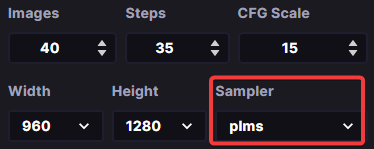
InvokeAI provides several different samplers that can be used to generate samples from a given data distribution. The k_euler sampler uses the Euler-Maruyama algorithm to generate samples from a given distribution. The k_dmp_2 sampler uses a second-order differential equation to generate samples. Each of the samplers has its own advantages and disadvantages, and experimentation will be rewarded.
Sampler selection in InvokeAI’s web interface
The sampler is used to select regions of an image and generate a diffusion map that conditions the output of the model. The diffusion map is then used to generate a detailed image conditioned on text descriptions. The sampler also allows for a more efficient and stable training process, as it reduces the number of steps needed to generate a result. Additionally, the sampler can upscale samples from the diffusion model, allowing for better results when generating smaller images.
Prompts
Prompts in Stable Diffusion are phrases or words used to generate AI-generated images. They are used to provide the AI model with guidance on what type of image to create. Prompts can range from abstract concepts to specific objects or scenes. They can be weighted to emphasise certain keywords.
Example prompts include “a picture of a black cat on a kitchen top”, “Paintings of Landscapes”, “Style cue: Steampunk / Clockpunk”, “a beautiful sunset over a beach” or “a futuristic cityscape.” Using very specific prompts, helps the AI to generate more accurate and detailed images.
Different models*
Confusingly, you can use different models with InvokeIA. The most commonly used is the Stable Diffusion Model. InvokeAI can use a range of other models for image processing and manipulation tasks. InvokeAI also provides tools for creating custom models, allowing users to create their own models that can be used in combination with the existing models.
InvokeAI supports a variety of models, from classic Machine Learning algorithms such as Random Forest and Logistic Regression to deep learning models such as Convolutional Neural Networks (CNNs) and Recurrent Neural Networks (RNNs). The main differences between these models are the type of data that they process and the types of result they produce. For example, Random Forest and Logistic Regression are good at predicting classifications, while CNNs and RNNs are better at recognizing patterns in images and text. Additionally, CNNs and RNNs can be used for more complex tasks such as image recognition, text generation, and language translation.
Sneaky disclaimer
So here’s my disclaimer. I’ve pulled a slightly sneaky trick with this blog post. I’ve recruited AI to explain AI. That seemed logical. I used AI text generation services YouChat and Perplexity to explain Stable Diffusion, using prompts like “Explain the CFG Scale in Stable Diffusion.”
That feels like cheating. But I did at least sanity-check the results and edit them before posting here. Some of the answers were in fact wrong. And it was no quicker writing the blog post this way. But roughly 80% of the text in this blog post was AI-generated. How does that make you feel? Tell me in the comments!
*The AI-based text-generators really struggled to explain the difference between the various models that work with InvokeAI. My suggestion is to install some and experiment!
This website uses cookies to improve your experience. I will assume you're ok with this, but you can opt-out if you wish.AcceptRejectRead More
Privacy & Cookies Policy
Privacy Overview
This website uses cookies to improve your experience while you navigate through the website. Out of these, the cookies that are categorized as necessary are stored on your browser as they are essential for the working of basic functionalities of the website. We also use third-party cookies that help us analyze and understand how you use this website. These cookies will be stored in your browser only with your consent. You also have the option to opt-out of these cookies. But opting out of some of these cookies may affect your browsing experience.
Necessary cookies are absolutely essential for the website to function properly. This category only includes cookies that ensures basic functionalities and security features of the website. These cookies do not store any personal information.
Any cookies that may not be particularly necessary for the website to function and is used specifically to collect user personal data via analytics, ads, other embedded contents are termed as non-necessary cookies. It is mandatory to procure user consent prior to running these cookies on your website.